Posted by Glenn Prior
Filed in Technology 22 views
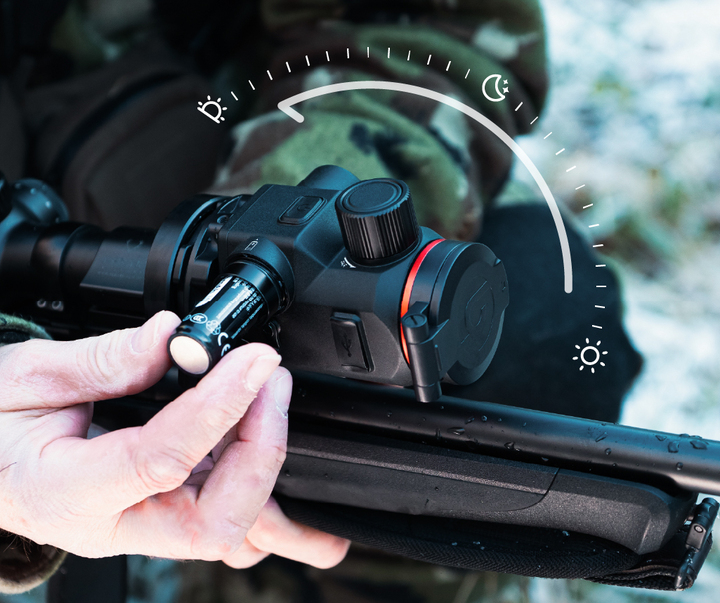
Modern precision shooting requires tactical gear that merges extreme durability with advanced electro-optical accuracy. Historically, shifting an operator's mission profile from day to night meant deploying heavy dedicated thermal scopes that required a complete platform change or a time-consuming re-zeroing process in the field. The introduction of high-end optical attachments has eliminated these operational barriers entirely. By mounting a professional thermal clip on for sniper rifle applications, marksmen can instantly add thermal imaging capabilities to their existing daytime scopes. This innovative design allows users to leverage their trusted high-power glass, custom reticles, and muscle memory while maintaining perfect zero consistency under complete darkness.
Inline thermographic optical systems are meticulously engineered to mount directly onto the objective bell of a standard daytime scope or via an integrated quick-detach Picatinny rail interface. The primary mechanical advantage of this optical setup is its absolute inline alignment. Because the thermal device is positioned directly in front of the daytime objective lens, the infrared radiation it captures is converted into a high-contrast digital display screen, which the daytime scope then views naturally like a standard target image.
Advanced manufacturers such as Guide Outdoor utilize precision machined, aerospace-grade aluminum alloys to build these housings, keeping the total weight minimal. For instance, advanced systems like the Guide Orion Series introduce ultra-light housing designs that reduce front-end weight imbalances. This engineering prevents barrel harmonics shifts and point-of-impact changes during live-fire scenarios. The internal optoelectronic layout is ruggedized from the ground up, allowing it to easily withstand the heavy multi-axis recoil forces associated with heavy calibers like .300 Winchester Magnum or .338 Lapua Magnum.
The primary core performance of an optical clip-on device is determined by its infrared sensor array and digital image processing algorithms. These parameters directly dictate how far an operator can detect, recognize, and accurately identify targets in adverse environmental conditions.
Sensor Resolution and Architecture: Utilizing advanced Vanadium Oxide (VOx) uncooled microbolometers with pixel pitches as fine as 12 micrometers ensures excellent spatial resolution across long distances. High-tier models offer expansive sensor matrices from 640x512 up to world-first 1280x1024 HD resolutions.
Thermal Sensitivity Performance: Achieving a Noise Equivalent Temperature Difference (NETD) down to 15mK or 18mK allows the device to detect microscopic thermal variations. This extreme sensitivity translates to high-contrast imagery, revealing structural details even during heavy rain, thick fog, or complete zero-light conditions.
Ultra-Low Latency Refresh Rates: Processing real-time streaming video at 50Hz with latencies as low as 26 milliseconds provides real-time tracking of moving targets, completely removing digital image stuttering or ghosting artifacts.
Maintaining a uniform workflow across varied tactical operations allows long-range teams to maximize efficiency. Choosing a high-performance clip on for thermal rifle scope needs allows marksmen to maintain a single core weapon system for 24-hour deployment cycles. Instead of removing a high-magnification daytime optic, the operator simply slides the attachment into position ahead of the objective lens.
Modern systems incorporate Guide Outdoor’s proprietary ApexVision AI system architecture to optimize the viewing experience. This built-in AI processing engine dynamically sharpens target boundaries, evens out high-frequency background noise, and highlights subtle temperature gradients. As a result, users can easily scan dense brush, foliage, or open terrain without experiencing eye fatigue over long observation windows.
To enhance situational awareness in complex tactical environments, modern inline thermal attachments seamlessly blend thermal imaging with specialized measuring tools. Adding an integrated laser rangefinder (LRF) module to the system gives operators real-time ballistics data without requiring extra handheld gear.
The Guide TB LRF Pro Series showcases this multi-functional approach by integrating an advanced laser rangefinder directly into its compact housing. This module precisely tracks target distances up to 1000 meters or more. The distance data pairs directly with the internal digital display, allowing the shooter to make accurate adjustments for windage and bullet drop using their primary daytime reticle. Furthermore, onboard Wi-Fi connectivity and Bluetooth synchronization allow field teams to stream live thermal footage to external tablets or command displays, improving real-time tactical coordination across the team.
| Operational Specification | Recommended Standard | Mission Benefit |
| Infrared Matrix Array | 640×512 to 1280×1024 Pixels | Delivers sharp target edge definition at long ranges |
| Thermal Sensitivity (NETD) | ≤15 mK to 18 mK | Ensures clear target detection in heavy fog and rain |
| Enclosure Protection Class | IP67 Dust and Waterproof | Guarantees complete submersibility and field reliability |
Field equipment must perform reliably throughout extended deployments in harsh weather conditions. To meet these high demands, professional thermal equipment is built with advanced power management systems and rugged environmental protection.
Using an adaptable clip on thermal scope attachment provides teams with exceptional field endurance. Modern configurations use high-capacity, user-replaceable 18650 lithium-ion batteries that deliver up to 10 hours of continuous runtime. This battery compartment design allows operators to swap cells quickly by feel in total darkness without losing orientation.
With full IP67 environmental sealing, the entire internal system remains completely protected against dust, sand, and moisture intrusion, even when exposed to heavy downpours or accidental water immersion. This extreme resilience ensures that precision shooters can confidently track and engage targets in any operational environment.