Posted by Allie Ravenwood
Filed in Business 12 views
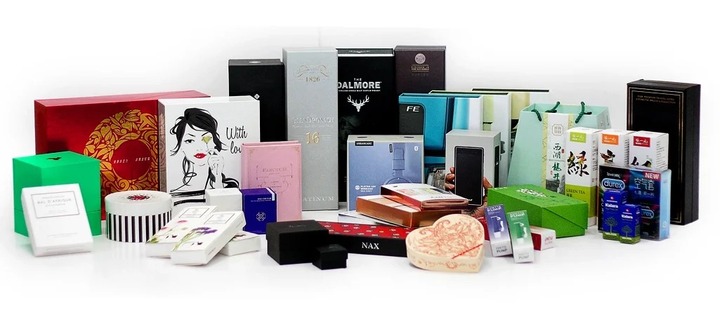
Fragile product packaging is where I've seen more brands make expensive, avoidable mistakes than almost anywhere else in fulfillment. The conversation usually starts after the damage after the customer photos, the one-star reviews, the replacement shipment costs. By that point, the problem had already compounded across hundreds or thousands of orders, and what should have been a packaging engineering decision became a customer service crisis.
Protection isn't a feature you add to packaging. It's the foundation everything else is built on.
Before specifying any protective solution, it helps to understand the actual forces acting on a package during a typical parcel shipping journey. A standard courier shipment experiences drop impacts usually from conveyor transfers and manual handling vibration across road and air transport, compression from stacking in transit vehicles and sorting facilities, and in some environments, humidity and temperature variation.
Most brands think about drops. Few think seriously about compression and vibration. A glass candle vessel might survive a single drop test fine but develop micro-fractures from sustained vibration across a long-haul shipment and arrive cracked at the destination. A ceramic product packed tightly with foam might be protected from impact but still shift enough under compression to contact the box wall and chip.
Custom boxes engineered for fragile products need to address all of these forces, not just the most obvious one. That requires a materials and structural approach, not just more bubble wrap thrown in at the packing station.
The corrugated double-wall construction is the starting point for most fragile product shippers I specify. Double-wall board two fluted mediums between three liners significantly outperforms single-wall in both edge crush resistance and puncture protection. For products above a certain weight or fragility threshold, it's not optional. The additional cost per unit is modest relative to a single damage claim.
Flute selection matters within that decision. B-flute combined with C-flute in a double-wall configuration gives you a balance of stacking strength and cushioning that handles most fragile consumer goods effectively. For exceptionally delicate items laboratory equipment, antique ceramics, high-value glass I've specified a triple-wall board, which starts to approach wooden crate performance at a fraction of the logistics complexity.
Internal fitment design is where the real protection engineering happens though. Die-cut corrugated inserts that suspend a product away from all six box walls are among the most reliable and cost-effective solutions available. The principle is straightforward: if the product never contacts the box wall directly, the box wall absorbs impact before it reaches the product. This suspended packaging approach consistently outperforms foam wrapping in controlled drop tests because it addresses the force distribution problem rather than just adding material between product and wall.
Custom boxes with integrated die-cut suspension inserts particularly for glassware, electronics, and ceramics reduce damage rates dramatically in real fulfillment environments. I've seen brands cut fragile product damage claims by over sixty percent after switching from loose fill to die-cut corrugated fitments sized specifically for their product.
Polyethylene foam remains one of the most reliable cushioning materials for high-value fragile goods. It's available in varying densities, softer open-cell foam for lightweight delicate items, firmer closed-cell for heavier products requiring impact absorption without bottoming out. The mistake brands make is using a single foam density across all products without calculating the correct cushioning curve for each item's weight and fragility rating.
Molded pulp inserts have gained significant traction over the past few years and deserve consideration beyond their sustainability credentials. Well-designed pulp fitments are rigid enough to maintain product positioning, absorb moisture rather than trapping it, and can be produced with surface detail that adds to the premium unboxing experience rather than detracting from it. For brands shipping wine, spirits, or artisan food products, pulp inserts solve both the protection problem and the brand presentation problem simultaneously.
Vacuum-formed plastic trays still make sense for certain applications particularly where tight dimensional tolerances are required and product geometry is complex. They're more expensive per unit than die-cut alternatives, but for high-value electronics accessories or cosmetic products where visual presentation inside the box is part of the brand experience, the investment is justified.
My position on this hasn't changed in years: the insert material decision should be driven by product fragility data and unboxing experience requirements, not by what the supplier has in stock. Too many brands accept whatever insert option their box manufacturer offers as a default rather than specifying what the product actually needs.
Custom boxes designed around product-specific insert requirements protect more effectively and often cost less in total system cost than generic solutions padded with excess void fill.
This is the step most small and mid-sized brands skip because it feels like an unnecessary delay. It isn't. ISTA 2A and ASTM D4169 are the standard test protocols for parcel shipment simulation; they cover drop sequences, vibration profiles, and compression loads that replicate real courier handling conditions. Submitting a packaging sample to a certified test lab before approving production runs costs a fraction of what a damage-driven reprint and redesign costs after the fact.
At minimum, run informal internal testing. Pack your product exactly as it will ship. Drop the sealed box from counter height onto each face, edge, and corner. Stack weight on top equivalent to what it might experience in a delivery vehicle. Open it and look honestly at what happened to the product inside. If anything shifted, contacted a wall, or showed stress marks, the design isn't finished yet.
Custom boxes that pass real-world simulation testing before production approval give brands a level of confidence that design-only approval simply cannot provide.
Fragile product packaging done correctly is an engineering discipline, not a creative one though the two don't have to be mutually exclusive. Custom Boxes built with the right corrugated construction, properly specified inserts, and validated through realistic testing protect products reliably across the full range of transit conditions they'll actually encounter. The brands that invest in this process upfront spend less on damage claims, replacements, and customer service recovery than the brands that treat protection as an afterthought. Packaging a fragile product well isn't complicated, but it does require treating the structural and materials decisions with the same seriousness you'd give any other product specification. Do that, and the damaged conversation largely disappears.