Posted by straberry 12
Filed in Business 9 views
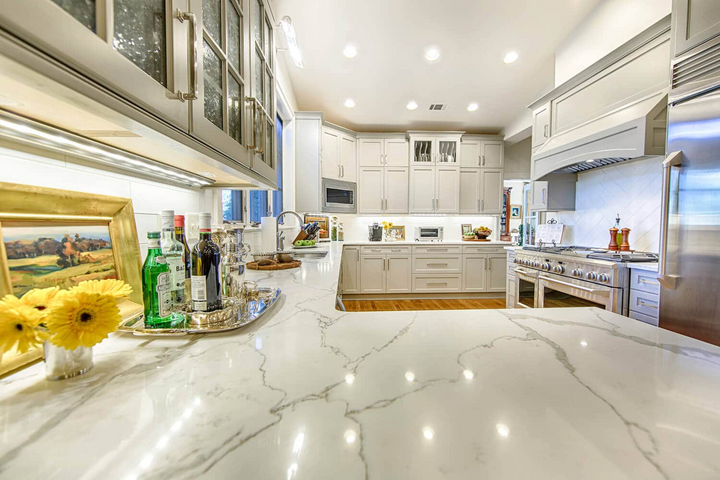
Choosing the right surface is not only about appearance. A kitchen counter, retail desk, bathroom vanity, or office feature must also handle daily use without becoming difficult or expensive to maintain.
Stains, scratches, heat marks, uneven joints, and limited colour choices can turn a stylish project into a long-term problem.
Quartz Marble offers a practical balance. It gives interiors the refined look of natural stone while providing the consistency and easy care expected from an engineered surface.
This 2026 guide explains how it is made, where it works best, how it compares with natural marble, what affects its price, and how to choose a design that will still look attractive years from now.
Quartz Marble is a common market term for engineered quartz designed to copy the colour, movement, and veining of natural marble. It is not a separate type of quarried marble.
Manufacturers combine quartz minerals with pigments and binding materials, then form the mixture into slabs under controlled factory conditions. Modern printing, colouring, and patterning methods can create soft Carrara-style lines, bold Calacatta veins, warm gold movement, or dramatic black-and-white patterns.
Because the surface is manufactured, its colour and design are usually more controlled than natural stone. Buyers can select slabs with similar movement for large counters, reception areas, and matching wall panels.
Engineered quartz is widely used in homes, hotels, offices, cafés, shops, clinics, and other commercial interiors. Major manufacturers describe quartz surfaces as non-porous materials made with quartz, pigments, and binders.
The biggest advantage is marble-inspired beauty without demanding marble-style care. The surface can look soft and classic, bold and luxurious, or clean and minimal.
The engineered surface is also valued for:
Strong daily performance: It can handle normal activity in kitchens, bathrooms, offices, and retail spaces.
Stain resistance: Its low-absorption surface helps resist common spills when they are cleaned promptly.
No routine sealing: Many engineered quartz products do not need the repeated sealing often considered for natural stone.
Simple cleaning: Warm water, mild soap, and a soft cloth are usually enough.
Design variety: Buyers can choose light, dark, warm, cool, subtle, or high-contrast patterns.
Consistent slabs: Controlled manufacturing makes it easier to plan long counters and commercial surfaces.
Multiple finishes: Polished options reflect more light, while matte finishes create a softer look.
Manufacturers still warn that no slab is completely scratch-proof, chip-proof, heat-proof, or seamless. Good care and correct installation remain important.
Natural marble is quarried stone. Every slab has its own veins, mineral marks, shade changes, and character. Engineered quartz is produced in a factory, so its appearance is more predictable.
|
Feature |
Engineered Marble-Look Quartz |
Natural Marble |
|
Composition |
Quartz minerals, pigments, and binders |
Natural quarried stone |
|
Pattern |
More controlled and repeatable |
Unique in every slab |
|
Stain resistance |
Generally high |
Varies and may need sealing |
|
Scratches and etching |
Resists normal wear but can still mark |
Can scratch and may etch from acids |
|
Heat |
Trivets are recommended |
Often handles heat better, but protection is still wise |
|
Maintenance |
Mild cleaning; usually no sealing |
Specialist care may be needed |
|
Design planning |
Easier to match across large areas |
Matching can be difficult |
|
Long-term cost |
Predictable care and replacement planning |
Maintenance and restoration may add cost |
The choice between engineered quartz and natural marble is not simply a question of “better.” Natural marble offers genuine variation and age-old character. Marble-look quartz provides greater consistency, easier cleaning, and fewer routine maintenance steps.
The Natural Stone Institute notes that sealing may improve the stain resistance of natural stone, but it does not make the material completely stain-proof.
This engineered surface can support both functional and decorative design.
It is commonly used for quartz marble countertops, food preparation areas, breakfast bars, waterfall islands, pantry counters, and full-height backsplashes.
A professional should confirm slab support, overhang limits, seam positions, sink cut-outs, hob clearance, and appliance heat zones. These details affect both safety and the final appearance.
Popular applications include vanity tops, basin surrounds, shower ledges, shelves, and wall panels.
Correct waterproofing and joint sealing are still essential. The surrounding installation—not only the slab—must manage moisture and prevent water from entering cabinets, walls, and floor areas.
In offices, shopping malls, hotels, clinics, restaurants, and shops, engineered stone works well for reception desks, retail counters, meeting tables, service points, and pantry areas.
Its controlled pattern can help designers repeat the same visual identity across different branches or commercial locations.
Designers also use it for feature walls, shelves, table surfaces, staircase details, approved fireplace surrounds, display units, and decorative cladding.
Ehsas lists kitchen islands, bathroom vanities, retail counters, reception desks, feature walls, and decorative cladding among common UAE applications.
Current 2026 collections show a move toward warmer whites, cream, beige, taupe, sandy gold, organic veining, and balanced warm-cool tones.
White slabs with grey lines remain popular, but many newer designs feel less cold and more natural. Warm colours also coordinate well with the wood, brass, bronze, and soft neutral finishes used in modern interiors.
Current design choices include:
White surfaces with fine grey veins
Calacatta-inspired bold movement
Carrara-style soft patterning
Black surfaces with white or gold veins
Beige, cream, and greige colours
Warm gold-veined designs
Minimal solid colours
Polished, matte, honed-look, or textured finishes
Match the surface to the entire room rather than choosing it separately.
Warm veining pairs well with walnut, oak, cream cabinets, and brass details. Cool grey veins suit white, charcoal, blue, or modern metal finishes. Dark surfaces can create a strong luxury look in reception areas and retail counters.
Check the slab under the project’s actual lighting. Daylight, cool LEDs, and warm LEDs can make the same colour look noticeably different.
Start with the location. A family kitchen, hotel reception, bathroom vanity, and decorative wall have different performance and design requirements.
Compare full slabs, not only small samples. On practical projects, we recommend reviewing the actual slab before fabrication begins. A sample may not show the complete vein direction, pattern scale, shade movement, or spacing.
Cambria also recommends viewing a full-size slab because a small sample cannot display every characteristic of the final product.
Check the following details before ordering:
Slab thickness and application suitability
Polished, matte, or textured finish
Vein direction and joint positions
Edge profile
Sink and appliance requirements
Required support and overhang
Product warranty
Batch and slab matching
Fabrication quality
Installation and after-sales support
The vein pattern should also match the scale of the room. Bold veins can turn a kitchen island or reception desk into a feature, while soft veins usually suit smaller or quieter spaces.
Choose an experienced supplier and installer who provides a written scope. A reliable quotation should identify the material, thickness, quantity, edge work, cut-outs, joints, delivery, fitting, and any excluded work.
Professional installation normally follows a clear sequence:
Site inspection and accurate measurement
Cabinet, wall, and base assessment
Slab and pattern approval
Template preparation
Cutting, polishing, and edge finishing
Sink, tap, hob, and appliance cut-outs
Protected transportation to the site
Positioning, levelling, and support checks
Joint alignment and adhesive application
Final inspection and care guidance
Poor measurements can create oversized gaps, weak joints, uneven overhangs, or incorrect appliance openings.
Cabinets and walls must be straight, square, level, and structurally sound before fitting. Poorly prepared cabinets can cause uneven seams and place unwanted pressure on the slab.
Cutting and grinding should only be handled by trained fabricators using suitable dust-control methods.
A 2026 NIOSH alert highlights respirable crystalline silica exposure as a serious occupational risk for workers who fabricate engineered stone.
Daily care is simple, but good habits still matter.
Wipe spills promptly with a soft cloth, warm water, and mild soap. For grease or difficult marks, use a cleaner approved by the product manufacturer.
Avoid:
Harsh chemicals
Oven and grill cleaners
Strong acids or alkalis
Abrasive powders
Rough scrubbing pads
Paint-removal chemicals
Unapproved stone treatments
Protect the surface with a chopping board rather than cutting directly on it. Although engineered quartz is durable, repeated contact with knives or heavy objects can eventually leave marks or damage exposed edges.
Use trivets beneath hot cookware, air fryers, slow cookers, electric pans, and other heat-producing appliances. Direct or sustained heat may damage resin-based surfaces, particularly around edges and joints.
Matte and textured finishes may show fingerprints, grease, or metal marks more easily than polished finishes. Ask for finish-specific care instructions before purchasing.
The final price depends on several project details:
Brand and slab quality
Material thickness
Colour and vein complexity
Required slab quantity
Edge design
Sink and appliance cut-outs
Number and position of joints
Transportation distance
Building access
Installation difficulty
Project location
Warranty coverage
Do not compare slab prices alone. One quotation may include templating, fabrication, transport, fitting, joint work, sink openings, and warranty support, while another may exclude several of these items.
A lower initial quote can become expensive if measurements are incorrect, veins are poorly matched, edges are roughly finished, or replacement pieces are needed.
It usually offers its best value when the buyer compares complete specifications, workmanship, warranty terms, and after-sales service—not only the lowest number.
Quartz Marble combines an elegant stone look with strength, design consistency, and manageable care. Compare full slabs, specifications, finishes, warranties, quotations, and installation details before making a final decision.
For professional material selection, measurement, fabrication planning, and installation in Dubai or across the UAE, contact Ehsas Technical and Cleaning Services LLC for a clear project quotation.
Usually not. Most engineered quartz products are non-porous and do not require routine sealing. Always follow the care guide supplied by the selected manufacturer.
Yes. They are stain-resistant, easy to clean, and available in many colours and patterns. Use chopping boards and trivets, and clean spills without delay.
No. It is a manufactured surface made with quartz materials, pigments, and binding agents. Its colours and veins are created to resemble natural marble.
Yes. It works well for vanity tops, basin surrounds, shelves, backsplashes, and wall features. Proper waterproofing, support, and sealed joints are still required.
Warm white, cream, or softly veined slabs can reflect light and make a compact room feel more open. Check the complete slab under the room’s actual lighting before ordering.