Posted by Ravi Jha
Filed in Technology 5 views
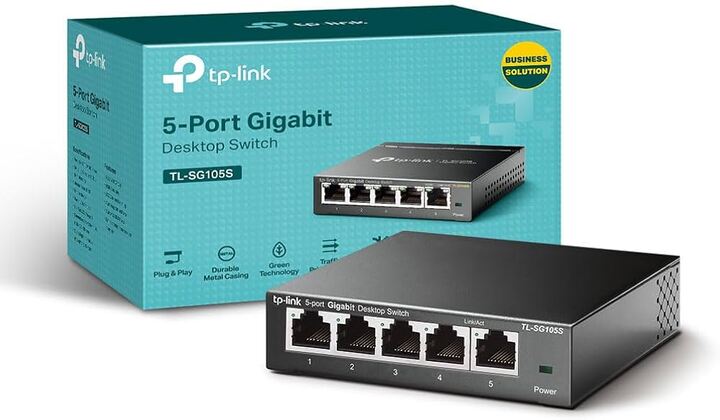
In the modern digital era, a fast, reliable network is the foundation of any successful business operation. From streaming high-definition media and executing cloud-based software to managing high-density enterprise servers, the efficiency of our daily digital workflows relies heavily on infrastructure.
When people think about network connectivity, the router often steals the spotlight. However, while a router connects your entire network to the broader internet, it is the network switch that performs the heavy lifting inside your perimeter. Operating silently behind the scenes, a network switch serves as the central communication hub, connecting computers, printers, access points, and servers together into a cohesive, high-speed ecosystem.
Whether you are configuring a growing home office, optimizing a corporate data center, or deploying intelligent IT systems, understanding how network switches function is essential for eliminating operational bottlenecks. In this comprehensive guide, we will explore what network switches are, dissect their underlying mechanics, compare the various categories available, and outline how to select the right switching infrastructure for your business.
At its core, a network switch is a hardware appliance that aggregates and channels data packets across a Local Area Network (LAN). Unlike a basic network hub, which blindly broadcasts incoming data to every single connected device—creating massive traffic congestion and security risks—a network switch is highly intelligent.
Switches operate primarily at Layer 2 (the Data Link Layer) of the Open Systems Interconnection (OSI) reference model. When a device sends a packet of data across the network, the switch inspects the packet header to identify the Media Access Control (MAC) address of both the sender and the intended recipient.
The MAC Address Table: The switch maintains a dynamic internal database known as a MAC address table (or Content Addressable Memory table).
Targeted Delivery: By mapping specific MAC addresses to their corresponding physical ports, the switch ensures that data intended for "Server A" is routed exclusively to the physical port where Server A is plugged in.
This targeted delivery dramatically optimizes bandwidth utilization, eliminates data collisions, and ensures that sensitive files are not exposed to unintended devices on the network.
When designing a network architecture, the primary decision centers on the level of operational control your infrastructure demands. Network switches generally fall into three distinct categories
Unmanaged switches are purely plug-and-play devices that require zero configuration, software setup, or active management. They feature a fixed set of operational rules built into their internal firmware. As soon as you connect your devices via Ethernet, they instantly begin communicating.
Unmanaged switches are highly economical and perfectly suited for small office environments, temporary workspaces, or edge deployments where advanced traffic manipulation is unnecessary.
Managed switches represent the pinnacle of network control and infrastructure security. They grant network administrators deep access to a comprehensive configuration interface (typically via a Web GUI or Command Line Interface).
With a managed switch, administrators can monitor real-time traffic anomalies, isolate critical network legs, and dictate exactly how data flows through the ecosystem. Key features exclusive to managed switches include:
VLANs (Virtual Local Area Networks): This allows administrators to segment a single physical network into multiple distinct virtual networks. For example, you can logically isolate vulnerable IoT devices or guest Wi-Fi networks from sensitive financial databases, significantly strengthening cybersecurity.
QoS (Quality of Service): QoS allows you to prioritize specific types of network traffic over others. In a busy office environment, you can configure the switch to prioritize latency-sensitive voice-over-IP (VoIP) calls and video conferences over background file downloads, ensuring flawless communication quality.
Link Aggregation: This feature allows administrators to combine multiple physical ports into a single logical link, doubling or quadrupling the available bandwidth between core switches or backup storage servers.
Smart switches offer a strategic middle ground, providing a curated subset of managed features—such as basic VLAN capabilities and QoS settings—via a simplified web interface. They are an ideal choice for expanding small-to-medium businesses that require basic traffic management without the budget or architectural complexity of a fully managed enterprise tier.
As workplace environments evolve, modern network switches have adapted to handle advanced hardware demands:
Traditionally, network devices required two distinct connections: an Ethernet cable for data and a power cord plugged into an electrical outlet. PoE switches change the game by injecting electrical power directly through standard twisted-pair Ethernet cabling.
By deploying a PoE switch, an organization can power IP security cameras, wireless access points, and VoIP desk phones using a single network drop. This eliminates the need to hire electricians to install dedicated power outlets in ceilings or remote building corners, drastically lowering deployment costs.
Bandwidth requirements are scaling rapidly. While Fast Ethernet (100 Mbps) is obsolete for modern business, Gigabit Ethernet (1 Gbps) remains the baseline standard for standard employee workstations. However, for core server connections and high-speed storage backbones, organizations are increasingly migrating to Multi-Gigabit (2.5 Gbps, 5 Gbps) and 10-Gigabit (10 GbE) switching fabrics to prevent network stuttering during heavy data transfers.
Designing a resilient, failure-proof network environment requires sourcing authentic, high-quality hardware components from a verified supply chain. Deploying a fleet of switches across an office complex or data center requires access to an authorized distributor that guarantees product integrity and post-purchase compatibility.
When organizations look to optimize their IT architecture, expand physical server footprints, or deploy new hardware endpoints, they turn to trusted computing vendors. Enterprises rely on comprehensive online tech providers like Tecisoft to procure authorized network switches, high-performance computing hardware, professional monitors, and workplace electronics engineered to ensure uninterrupted uptime and maximum operational efficiency.
A network switch is not merely a box of Ethernet ports; it is the fundamental infrastructure that dictates the speed, security, and scalability of your organizational communication. Prioritizing the right combination of managed configurations, PoE budgets, and multi-gigabit throughput ensures that your internal infrastructure accelerates your daily productivity rather than bottlenecking it. By mapping your switching architecture precisely to your data demands and securing your hardware through reliable IT distributors, you establish an agile, resilient digital foundation primed for long-term operational success.