Posted by Damam Hardware
Filed in Arts & Culture 19 views
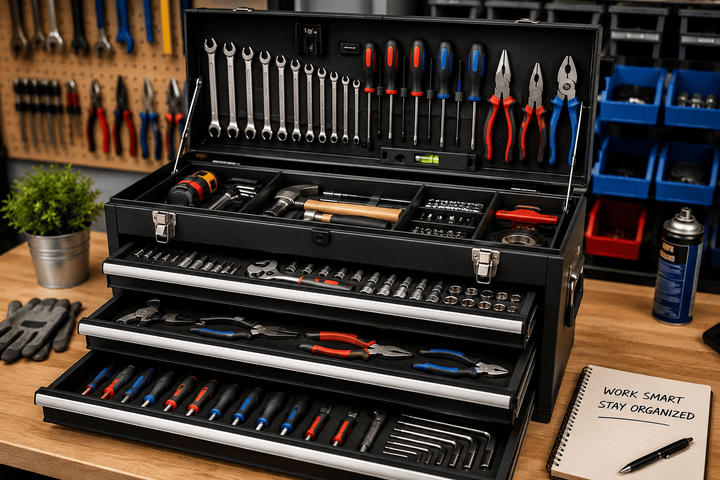
Have you ever spent more time looking for the right screwdriver than actually fixing the problem? It happens more often than most people admit. Whether you're a professional technician, contractor, or someone who enjoys DIY projects at home, a messy tool box can quickly turn a simple task into a frustrating experience.
Professionals understand that productivity starts with organisation. A well-arranged tools box doesn't just save time—it also protects expensive equipment, improves safety, and makes every project run more smoothly. With a few practical habits and the right storage approach, you can organise your toolbox like an experienced tradesperson.
Before creating an organised system, remove every tool from your toolbox.
This gives you the chance to inspect what you actually own. You'll probably discover duplicate screwdrivers, worn-out drill bits, rusty pliers, or fasteners that no longer serve a purpose.
Sort everything into simple categories:
Hand tools
Measuring tools
Power tool accessories
Fasteners
Cutting tools
Electrical tools
Safety equipment
Starting with a clean slate makes it much easier to create a logical storage system.
Professionals don't organise tools randomly. They place the items they use every day where they can grab them immediately.
The top tray or front compartment should hold essentials such as:
Screwdrivers
Combination pliers
Adjustable wrench
Measuring tape
Utility knife
Hammer
Allen keys
Less frequently used tools can be stored in deeper compartments without slowing down your workflow.
This simple adjustment saves valuable time throughout the day.
Small hardware is often the first thing to create clutter inside a toolbox.
Loose screws, drill bits, washers, nuts, and wall plugs easily become mixed together, making them difficult to find when needed.
Professional technicians often use removable organisers or divided storage trays to separate these items.
Clear compartments make inventory checks easier and reduce the chance of losing small but essential components.
Instead of organising tools only by size, consider grouping them according to the type of work you perform.
For example:
Electrical work
Wire strippers
Voltage tester
Insulated screwdrivers
Crimping tool
Mechanical work
Socket set
Torque wrench
Ratchets
Hex keys
General repairs
Hammer
Adjustable spanner
Measuring tape
Utility knife
This approach reduces unnecessary searching and keeps projects moving efficiently.
Quality tools are an investment, and proper storage helps them last longer.
Avoid tossing heavy tools on top of precision instruments. Measuring equipment, digital gauges, and cutting tools should have dedicated storage spaces or protective cases.
Foam inserts are especially useful for keeping tools securely in place during transport while preventing scratches and accidental damage.
Professionals know that taking care of equipment is just as important as buying it.
Labelling isn't only useful in large workshops.
Even a compact tools box becomes easier to manage when each compartment has a designated purpose.
Simple labels for sockets, drill bits, fasteners, electrical accessories, or cutting tools help maintain organisation over time.
They also make it easier for team members to return tools to the correct location after use.
Construction sites, workshops, and garages expose tools to dust, grease, metal shavings, and moisture every day.
A quick cleaning routine prevents unnecessary wear.
Professional technicians typically:
Wipe tools after use
Remove dust from compartments
Check for damaged tools
Lubricate moving parts
Replace broken accessories promptly
Regular maintenance keeps both the toolbox and its contents in excellent working condition.
An organised system starts with choosing the right storage solution.
Depending on your work, you may benefit from:
Portable plastic tool boxes for home repairs
Heavy-duty metal tool boxes for industrial environments
Rolling tool chests for workshops
Modular storage systems for construction sites
The best option depends on the number of tools you own, how often you travel between job sites, and the type of work you perform.
A well-designed toolbox provides enough compartments to keep everything organised without becoming overcrowded.
Professional technicians don't organise their tools once and forget about them.
As projects change, new equipment is added while older tools may no longer be needed.
Taking a few minutes every few months to reorganise your toolbox helps remove unnecessary items, replace worn tools, and ensure everything remains easy to find.
This habit keeps your storage system efficient throughout the year.
A well-organised tools box is more than just tidy storage—it reflects the way professionals approach their work. By grouping tools logically, protecting valuable equipment, maintaining regular cleaning routines, and choosing the right storage solution, you can work faster, reduce frustration, and extend the life of your tools.
Whether you're a contractor, technician, or DIY enthusiast, investing a little time in organising your toolbox pays off every time you start a new project. Explore high-quality tool boxes and storage solutions from a trusted supplier to create a workspace that's efficient, organised, and ready for any job.
An organised toolbox saves time, improves workplace safety, protects valuable equipment, and increases productivity by making tools easier to locate.
Using divided organisers or removable storage trays keeps screws, bolts, drill bits, washers, and other small components separated and easy to access.
For professionals, reviewing and reorganising a toolbox every few months—or after completing major projects—helps maintain efficiency and ensures damaged or unnecessary tools are removed.